

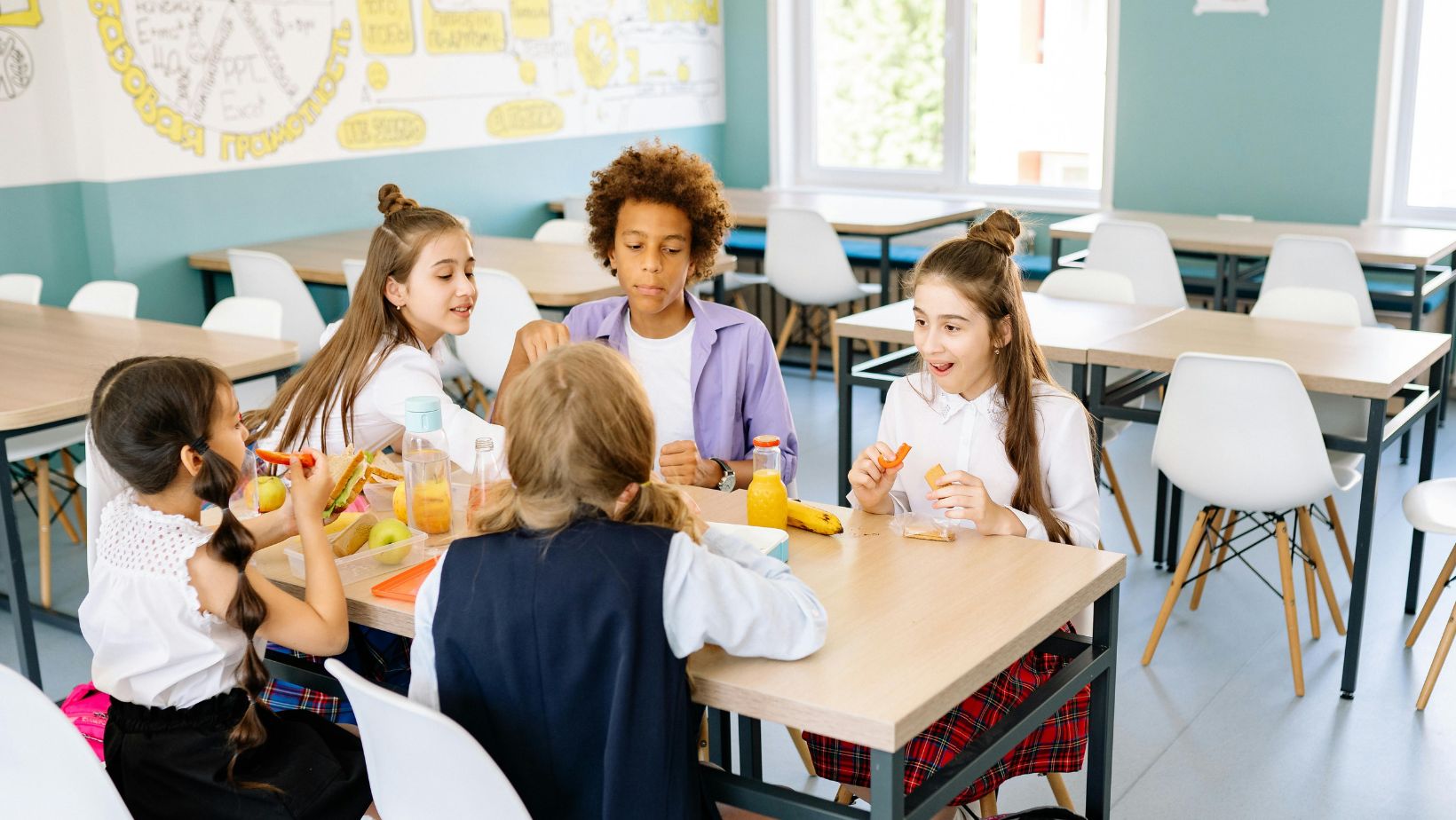
Here’s something nobody tells you when you become a parent. The question of where to send your kid to school doesn’t get asked once. It keeps coming back. Sometimes it sneaks up on you at a back-to-school night when you realize your kid’s teacher has thirty-two students and can barely remember names. Sometimes it hits you over coffee with a friend whose daughter just switched to a private school and suddenly loves going to class again. And sometimes it lands in your lap because you moved to a new city and you’re staring at school ratings online at midnight wondering what any of it actually means.
The public-versus-private debate gets treated like this big philosophical question, but for most families it’s actually a practical one. Can we do this? Should we do this? And is right now the time?
There Are Natural Windows for This Decision
Most families don’t wake up on a random Tuesday and decide to upend their kid’s school situation. It tends to happen at moments when change is already in the air.
The most obvious one is the very beginning. Your kid is four or five, they’re about to start school, and you’re picking for the first time. Nothing is established yet. There are no friendships to disrupt, no routines to break, no teachers your child is attached to. You’re working with a clean slate, and that freedom is worth appreciating because it doesn’t come around often.
Transition years are the next big opening. The jump from elementary to middle school or middle to high school already involves a shake-up. New building, new kids, new expectations. If you’ve been thinking about making a switch, these are the moments where it’s least disruptive because everything is already shifting anyway. Your kid won’t be the only one walking into an unfamiliar hallway on the first day.
And then there are the curveballs. A cross-country move. A rough year that made it obvious something needs to change. A promotion that suddenly puts private tuition within reach, or a job loss that takes it off the table entirely. Life doesn’t wait for convenient timing, and some of the most important school decisions happen in the middle of chaos rather than during a calm, well-researched planning phase.
The takeaway here is simple. This isn’t a decision you make once and forget about. It’s worth revisiting whenever your family’s situation shifts, even if the answer ends up being the same as last time.
Let’s Be Honest About When Private School Makes Sense
Private school only works as a real choice when you can pay for it without white-knuckling the family budget for the next ten years. I know that’s not the inspirational opener people want, but it’s the truth. Tuition is relentless. It shows up every year, usually increasing a little each time, and it has to coexist with the mortgage, the car payments, retirement savings, groceries, and everything else that keeps a household running.
Now, that doesn’t mean the sticker price is the final word. A lot of parents assume they can’t afford a school they’ve never actually asked about. Financial aid at private schools is more common than people think. Scholarships exist. Sibling discounts exist. Some schools are genuinely working to make their programs accessible to families across a range of incomes, and you won’t know what’s available unless you have the conversation. Don’t rule something out based on the number on the website alone.
Money aside, private school makes the most sense when there’s a specific, identifiable reason to pursue it. Your child needs smaller classes because they’re getting lost in the crowd. There’s a learning difference that the public school isn’t set up to support well. You want an educational approach or a set of values that you simply can’t find in the public options near you.
Embrace Academy in Las Vegas is a good example of what draws families to private school for the right reasons. It’s a smaller, relationship-focused school where kids get the kind of daily attention and personal investment that’s nearly impossible to replicate in a building with eight hundred students. Parents who’ve spent years watching their kid fade into the background at a larger school tend to recognize what a place like that offers the moment they walk through the door. But it still has to be a choice the family can sustain, financially and logistically, without everything else falling apart.
And Let’s Be Equally Honest About When Public School Wins
There’s a weird cultural thing where some parents treat choosing public school like settling. Like they didn’t care enough or try hard enough to get their kid into something better. That attitude drives me a little crazy, because it ignores the fact that plenty of public schools are flat-out excellent. Some are better than the private schools in their zip code. Some offer opportunities that private schools with smaller budgets and smaller student bodies simply can’t.
A good public high school might have twenty AP courses, a nationally ranked debate team, three different foreign languages, and a theater program that puts on productions rivaling what you’d see at a small college. A private school with sixty kids per grade can’t offer that breadth no matter how dedicated the faculty is. Scale creates options, and for kids who benefit from having a wide menu of things to try, public school delivers in ways that smaller environments can’t.
Public school also makes a lot of sense when paying for private would require the family to sacrifice in ways that actually hurt the child’s overall quality of life. Sounds counterintuitive, but think about it. If private school tuition means no family vacations, no summer camp, no music lessons outside of school, and constant low-grade stress about money at home, what exactly has been gained? Kids absorb household tension even when nobody says a word about it. Sometimes the best thing for a child’s development is a family that isn’t financially stretched to the breaking point.
And honestly, some kids just do better in a bigger pond. They want the noise and the variety. They want to find their crew among hundreds of options instead of a few dozen. They want the anonymity to reinvent themselves a little without every teacher knowing their entire backstory from kindergarten. Not every child needs a small, close-knit environment to thrive. Some find it suffocating.
Forget the Labels and Look at What’s in Front of You
The single best piece of advice I can offer any parent making this decision is to stop comparing categories and start comparing specific schools. The question isn’t whether public school is better than private school. That question has no answer because it depends entirely on which public school and which private school you’re talking about.

Go visit. Both of them. All of them, if you can. Walk the halls during a school day, not during an open house when everything has been polished up for guests. Watch how teachers talk to students in the hallway. Notice whether the kids look engaged or checked out. Ask the admissions office hard questions and pay attention to whether they give you real answers or rehearsed ones.
Talk to parents whose kids are already there. Not the ones the school hand-picks as ambassadors, but the ones you find on your own through neighborhood groups or mutual friends. Ask what surprised them, what frustrated them, what they wish they’d known before enrolling. Those conversations are worth more than any brochure or website.
And for the love of everything, think about the commute. I know this sounds trivial compared to academic philosophy and teacher quality, but a school that adds forty-five minutes of driving to your morning, every single morning, for years on end will grind your family down. Location matters. Logistics matter. The best school in the world isn’t worth it if getting there and back makes everyone miserable five days a week.
Your Kid Will Tell You If You’re Paying Attention
Here’s the part that parents sometimes forget in all the researching and touring and spreadsheet-comparing. Your child is a person with opinions, preferences, and instincts of their own. They might not be able to articulate what kind of school environment works best for them, especially when they’re young. But they’ll show you.
A kid who comes home energized and full of stories about what happened that day is in the right place. A kid who dreads Monday mornings, who stops talking about school altogether, who seems smaller and quieter than they used to be — that’s data. And it matters more than test scores or college placement rates or whatever metric the school is using to sell itself to prospective families.
Stay tuned in. The choice between public and private isn’t something you get right once and never think about again. It’s an ongoing question that deserves an honest answer every time it comes back around. And it will come back around.
The school that works this year might not work next year. That’s not a failure. That’s just what it looks like to pay attention and respond to what your kid actually needs instead of what you decided they needed three years ago. Be willing to change course. Be willing to ask the question again even when the answer is inconvenient. That flexibility is worth more to your child than the name on any school building.